
One of the most crucial points to keep in mind when taking out a loan is the interest rates. It impacts your monthly payments and the overall cost of the loan. Fixed and variable interest rates are common types of interest rates.
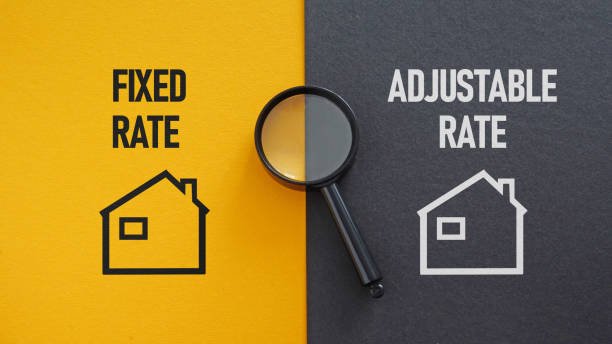
If you’re unsure, you can use the knowledge of the differences between them to pick a loan that suits your financial situation and your monthly payment budget.
What Is a Fixed Interest Rate?
With a fixed interest rate, the rate remains constant for a specific time or in many loans, it remains during the entire repayment period. Every borrower can often more accurately foresee their regular payments as the rate is not changing.
For instance, for a fixed-rate loan, if there is a rise in the market interest rate, the rate on the loan may not rise in tandem. This can help the budgeting process be easier because the interest portion of the payment doesn’t change.
Some may find fixed-rate loans to be enticing if they want to know exactly what they will be paying each month and are seeking more security against future rate hikes.
What is a Variable Interest Rate?
A variable interest rate can fluctuate depending on conditions of the loan and the benchmark/market rate it is tied to. If the applicable rate does change, the interest rate to be paid on the loan might also change.
Those who took out loans that have variable rates could end up with cheaper loans if interest rates drop. If rates go up, however, their payments or total interest payments could go up. With variable-rate loans, the rate is not as certain as when you have a fixed interest rate.
Distinctions between fixed and variable rates.
There are two major differences: stability and ease of use. Fixed rate gives you more certainty, variable rate may vary over the life of the loan.
Generally, those who take out a fixed-rate loan can anticipate their interest rate for the duration of the fixed rate. Future payments may be difficult to predict if the rate is variable since the rate might change in line with market conditions.
Another distinction is as to whether it is likely to be expensive. It can cost more than a variable rate at the outset, but offers security against future cost increases with a fixed-rate loan. The variable rate rate may be lower at first but could still increase in the future.
The benefits of a fixed interest rate.
Fixed rates have a number of advantages:
- Lower monthly payments that are easier to plan for.
- Predictable monthly payments.
- Easier household budgeting
- This is insurance provided from an increase in interest rates.
- Rising confidence in the cost of borrowing.
This might be a good choice for borrowers who prefer knowing exactly how much they are paying and prefer a consistent payment rather than having it fluctuate.
If you’re considering a fixed interest rate, be aware of these disadvantages:
Fixed rates also have potential disadvantages. When interest rates in the market decline, borrowers might not be able to take advantage of the lower rates.

There may be fees or penalties associated with refinancing or early repayment of some loans. The specific terms will vary depending on the lender and loan agreement.
Advantages of Variable Interest Rates
Variable rates may be a good option when market rates are declining, and when a borrower thinks that rates will stay fairly level.
Among the possibilities might be a lower initial rate, and the ability to pay less interest if market rates go down. Depending on the terms of the lender, there might be some flexibility in some variable-rate loans.
Disadvantages of Variable Interest Rates
The biggest danger is that of uncertainty. Rising market interest rates may make it more expensive to borrow.
If you have a higher rate, you will pay more or more interest over time. This can be difficult for borrowers that have restricted room in their monthly budget.
Which is the better rate?
There isn’t one right answer that’s suitable for every borrower. This will depend on your income, budget, loan term, financial goals and expectations of interest rates.
If you want to know just how your payments will be, it might be better to go with a fixed rate. A variable rate might suit borrowers who feel they can afford to adjust payments, and seek the potential advantage of lower rates.
Don’t just focus on the interest rate, compare the total borrowing cost before you make a selection.
Think about Your Financial Stability.
The amount you’re able to afford is an important consideration. A fixed rate might offer greater stability if you would find it difficult to make a larger monthly payment.
Depending on the amount of your savings and flexibility in your budget, you might be a better candidate for a variable rate.
Carefully read the terms and conditions of the Loan Agreement.
Be sure to understand what the interest rate is and when it may change. Be familiar with the benchmark for a variable-rate loan and whether there is a maximum and/or minimum rate as well as how rate changes will impact your payments.
Please look at the charges, repayment options for early and any other fees before signing the agreement.
Final Thoughts
There are pros and cons to both fixed and variable interest rates. Fixed rates can give you a sense of stability and prevent a rise in rates, where variable rates can be advantageous if interest rates go down.

It is dependent on the financial situation and risk appetite. Get all the details of the loan term, the risk involved and the repayment plan that suits your budget.
FAQs
1.What is the greatest difference between fixed and variable interest rates?
A fixed rate is a rate that does not vary for the duration of the fixed-rate period, whereas a variable rate can change under the terms of the loan and/or market rates.
2. Should I go for a fixed rate?
A fixed rate will offer greater certainty of payments and protection against an increase in rates. But, it is not better or worse in general, depending on the borrower’s situation and the terms of the loan.
3. Is the rate of interest on a variable mortgage rate able to drop?
Yes. A variable rate could drop if the interest rate in the corresponding benchmark or the market rate drops, subject to the terms of the loan.
4. What is the best interest rate for the beginning investor?
Those who want to make consistent payments will like a fixed rate. For those who are at ease with the idea of changing payments, a variable rate may be an option – though it should be researched thoroughly before choosing.